Define. Publish. Deploy. Trigger. Run.
Ship agents like software: mutable definitions become immutable releases, then environment deployments with explicit credentials and tool policies. Every run pins the release that executed.
The path from authoring to execution.

1 · Define
Author agent instructions, model, memory, tools, sandbox, and triggers as mutable definition state.

2 · Publish
Freeze an immutable, content-hashed release—the exact manifest every run can pin and replay.

3 · Deploy
Attach the release to an environment with credentials, tool bindings, and policies—no secrets in the manifest.

4 · Trigger
Start a run via API, chat, email, schedule, heartbeat, webhook, or signed channel message.

5 · Execute
Worker runs the pinned release. Model only sees declared tools. Approvals suspend cleanly.

6 · Stream & meter
Durable streams, semantic events, and usage materialize with the run—not bolted on later.

Org → project → environment → deployment → release → thread → run.
Tenancy and environments hold credentials. Deployments pin releases. Threads hold conversations. Runs are the unit of execution—replay-safe and inspectable.
Many ways in. One execution model.
API, schedules, heartbeats, webhooks, Slack, Telegram, and email land on the same thread-and-run model.
2
3
4
5
6
7
8
9
10
11
12
13
14
15
16

Pin an exact commit and reuse successful immutable artifacts across environments.
Content-hashed manifests. Roll forward on purpose; replay without guessing.
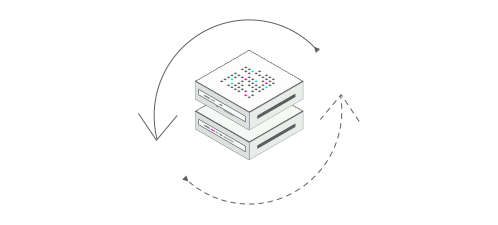
Approvals, async tools, and retries preserve continuation across worker boundaries.

Semantic events and usage are part of state changes—not afterthoughts.
Platform operates agents. Capabilities arm them.
This page is the control plane and lifecycle. Capabilities covers email, tools, sandboxes, memory, and channels agents use inside a run.

Coming soon—embed this control plane in products you ship.

Frequently Asked Questions
An immutable, content-hashed manifest published from a definition. Deployments pin a release to an environment; runs execute that exact pin.
Through the API, chat, agent email, schedules, heartbeats, webhooks, or signed channel messages—all on one thread-and-run model.
The runtime resolves deployment and release, loads history and memory, calls the model, validates tools against the allowlist, and streams results while emitting events.
Coming soon. Follow @DeploymentsAI on X for launch updates.